
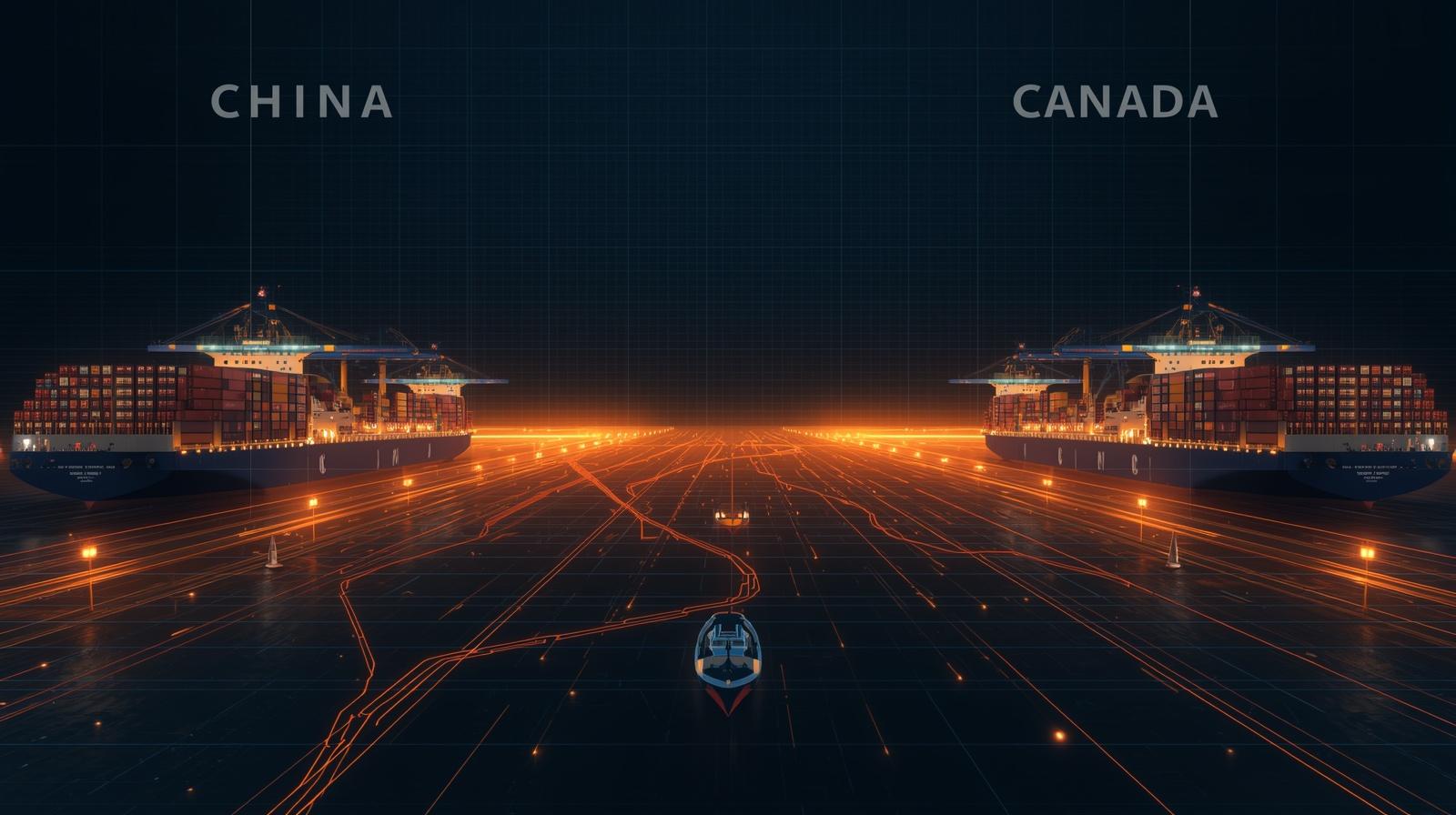
Shipping From China to Canada
Reliable freight solutions for businesses moving cargo from China to Canada, including ocean freight, air freight, container shipping, customs coordination, and end-to-end logistics support.
China to Canada Shipping Solutions
Shipping from China to Canada is one of the most important trade corridors for businesses importing consumer goods, industrial products, electronics, packaging materials, retail inventory, and manufacturing inputs. Companies moving cargo on this lane typically need a freight solution that combines competitive transit times, reliable carrier options, customs coordination, and final delivery visibility once cargo arrives in Canada.
HMA Logistics supports China to Canada shipping through ocean freight, air freight, and container-based solutions tailored to shipment size, urgency, and destination. Cargo commonly departs from major Chinese export ports such as Shanghai, Ningbo, Shenzhen, and Qingdao and arrives through Canadian gateways including Vancouver and Prince Rupert, with inland movement arranged onward to Toronto, Montreal, Calgary, and other destinations across Canada.
For larger volumes, Full Container Load shipping is often the most efficient option. For smaller commercial cargo, Less-than-Container Load can reduce cost by consolidating freight with other shipments. When urgent delivery is required, air freight provides faster transit at a higher transportation cost. The right mode depends on cargo volume, time sensitivity, and how your business balances speed against landed cost.
Common Shipping Options From China to Canada
Ocean Freight
Ocean freight is the most common solution for China to Canada shipping. It is usually the most economical mode for containerized cargo and works well for routine commercial imports where transit time is important but not urgent.
Air Freight
Air freight is suitable for urgent, high-value, or time-critical shipments. Businesses often use it for launch inventory, replenishment gaps, or shipments where delay would disrupt sales or operations.
FCL and LCL
FCL is ideal for larger cargo volumes that justify full container space. LCL works well for smaller shipments that do not require a complete container but still need structured international freight movement.
Why Businesses Import From China to Canada Through Structured Freight Planning
Cost Control
Shipping cost on this lane depends on container size, fuel market conditions, port congestion, seasonality, and inland delivery requirements. Structured planning helps businesses choose the right mode and avoid preventable cost exposure.
Transit Visibility
Reliable freight coordination improves predictability from origin booking through destination arrival. This matters for businesses managing inventory commitments, launch deadlines, and replenishment cycles across Canada.
Customs Coordination
Importing into Canada requires correct documentation and clearance handling. Managing freight and customs together reduces the risk of delays once cargo reaches the destination gateway.
China to Canada Shipping Process
Shipment Planning
Freight planning starts with cargo details, origin location, destination, dimensions, weight, and target shipping date. This determines whether ocean freight, air freight, FCL, or LCL is the most suitable solution.
Origin Coordination
Cargo is picked up from supplier or delivered to the origin warehouse or terminal. Documentation is reviewed before export handling begins, helping avoid issues at booking or port entry stage.
Export Booking
Space is secured with the carrier based on route, timing, and shipment type. For container shipping, booking decisions are often influenced by container availability, sailing schedules, and port congestion.
International Transit
Cargo moves from China across the Pacific to Canada through the selected mode. Ocean freight shipments typically route through major west coast gateways, while air freight arrives through designated airport handling channels.
Canadian Customs Clearance
Once cargo arrives in Canada, customs documentation and release procedures must be completed before cargo can move to final destination. Proper coordination at this stage reduces delay and storage risk.
Final Delivery
After release, freight moves by truck or inland transportation to the consignee location. This final stage is especially important for importers delivering inventory to distribution centers, warehouses, or retail operations.
Major Ports Used for Shipping From China to Canada
Chinese Export Ports
Shanghai, Ningbo, Shenzhen, and Qingdao are among the main Chinese gateways supporting containerized exports to Canada. Port selection depends on supplier location, vessel schedule, and route economics.
Canadian Arrival Ports
Vancouver and Prince Rupert are major Pacific gateways for container shipping arriving from Asia. These ports provide entry access for cargo that continues into western and central Canadian markets.
Inland Distribution
After arrival, freight can move onward to Toronto, Montreal, Calgary, Edmonton, and other Canadian destinations through coordinated inland transportation and distribution planning.
Request a China to Canada Shipping Quote
Speak with HMA Logistics about ocean freight, air freight, container shipping, and import planning for cargo moving from China to Canada. We can help structure the right route, mode, and handling approach for your shipment.
Request Quote